Useful Resources and
Frequently Asked Questions

Below are a list of useful resources and information for you to use, and a list of some Frequently Asked Questions and Answers.

Useful Resources

  • Adapt Kerry Women’s Refuge & Support Services – 066 712 9100
  • CARI Helpline – 0818 924 567
  • Childline – 1800 666 666
  • Citizens Information Centre Tralee – 0818077860
  • Garda Victim Support Office Freephone – 116 006
  • Crime Victims Crimeline –  Freephone 116 006
  • Garda Siochana – 999
  • Emergency Call Answering Service – 112
  • Caherciveen Garda Station – 066 9473600
  • Killarney Garda Station – 064 6671160
  • Listowel Garda Station – 068 50820
  • Tralee Garda Station – 066 7102300
  • Homeless Information Centre – 066 7183675
  • Harbour Counselling Cork – 021 486 1360
  • Irish Family Planning Association Pregnancy Helpline – 0818 4950511
  • Kerry University Hospital – 088 718 4000
  • Jigsaw Kerry – 066 718 6785
  • Legal Aid Board – 066 712 6900
  • MABS Money Advice & Budgeting Service – 0818 072190
  • Pieta House – 066 716 3660
  • Samaritans – 116 123
  • Kerry Adolescent Counselling – 066 718 1333
  • South Infirmary/Victoria Hospital (Sexual Assault Treatment Unit) – 021 492 6297
  • Southwest Counselling Centre – 064 663 6416
  • STI Clinic (Cork/Kerry) – 021 496 6844
  • Women’s Aid Helpline – 1800 341 900

We have a number of Publications available for you to download and read. Click on the links below to download.

KRSAC Strategic Plans

Strategic Plan 2024-2028

Strategic Plan 2018
KRSAC Information Booklets

KRSAC Information Booklet – Healing Process for Victims of Rape & Sexual Assault HEALING PROCESS FOR VICTIMS OF RAPE & SEXUAL ASSUALT - Infomation Booklet
KRSAC Information Booklet – For Friends & Family of Victims of Rape & Sexual Assault FOR FRIENDS & FAMILY OF VICTIMS OF RAPE AND SEXUAL ASSAULT - Information Booklet
KRSAC Information Booklet – When your Partner has been sexually abused WHEN YOUR PARTNER HAS BEEN SEXUALLY ABUSED - Infomation Booklet
KRSAC Information Booklet – Sayit Booklet SAYIT BOOKLET - Infomation Booklet
National Organisation Publications

RCNI Legal Information Pack for
Practitioners Advising Survivors of Sexual Violence
RCNI Legal Information Pack for Practitioners Advising Survivors of Sexual Violence


RCNI Guide to the Legal Process for Survivors of Sexual Violence

National Strategy on Domestic
Sexual and Gender-based Violence 2010-2014
National Strategy on Domestic Sexual and Gender-based Violence 2010-2014

Director of Public Prosecutions (DPP) Publications

Role of the DPP

Going to Court as a Witness
How we make Prosecution Decisions
How to request reasons and reviews
Making a Victim Impact Statement
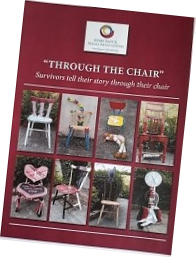
Books

“Through The Chair Book” Through The Chair

Frequently Asked Questions and Information

Counselling can be described as a process which provides help, support and an understanding listener, Counselling helps clients to gain clearer insight into themselves and their situation so that they are better able to draw on their own resources to help themselves, by creating a place of acceptance.

The main focus of the counselling provided by the Kerry Rape & Sexual Abuse Centre is non-directive; this means that the counsellor will not offer advice on what you should do. Often people come to counselling wanting someone to take control of the situation but in reality you as the client, already have the answers, you might just need to talk it through in an environment where you feel accepted and respected.

Counselling and Confidentiality

Everything that is said between the client and the counsellor is treated in total confidence. Confidentiality will only be limited in exceptional circumstances i.e. confidentiality will be limited if there is a concern regarding the sexual abuse of a minor (under 18 years). If confidentiality is to be limited it will be talked through with the client in advance.

No, we provide support to survivors of rape and sexual abuse and their partners, families and close friends

Sometime clients are referred to us from other agencies and organisations but the majority of our clients are self-referrals.

You can contact us on our freephone 1800 633 33 or call to our centre.

The Kerry Rape & Sexual Abuse Centre offers a free professional counselling service to people of all genders who have experienced or have been affected by rape, sexual abuse or any other form of sexual violence.  
  • Believe them
  • Be yourself – treat the survivor just as you normally do. Try not to be overly protective.
  • Express your caring and concern for the survivor
  • Allow the survivor to have their feelings
  • Reassure the survivor that confusing and painful feelings are to be expected
  • Let the survivor know that the assault was not their fault. Do not judge or blame the survivor for their actions.
  • Remember that the powerlessness is a big issue. You may guide the survivor. But let the survivor have control of their own life and make their own decisions about how to proceed.
  • Encourage, but do not force the survivor to talk
  • Listen in a caring way, but don’t try to ‘fix’
  • Help the survivor understand the importance of getting medical attention, gently encourage seeking help from those with expertise in sexual violence
  • Find healthy ways to deal with your anger, rage and fears without further traumatizing the survivor
  • Respect the confidentiality of the survivor
  • TAKE CARE OF YOURSELF. Make sure YOU have emotional support if necessary

When someone has been raped or sexually abused they may experience unusual thoughts, feelings and / or behaviours and may not be acting ‘like their usual self’.

Counselling helps people to understand that these feelings and responses are normal reactions in the aftermath of rape or sexual abuse

Some feelings or reactions a survivor may experience:

  • Ashamed, Guilty
  • Angry, Depressed
  • Betrayed, Confused
  • Avoiding work or over-working
  • Am I going mad / am I normal?
  • Change in eating habits (not eating or over-eating)
  • Changes in sleep habits (unable to sleep or sleeping too much)
  • Dirty, may wash constantly
  • Engaging in risky behaviours
  • Feel that they are over-protective of their children.
  • Feel that they do not deserve to be loved or happy
  • Find it hard to trust people
  • Find sex is a problem because it triggers off memories of abuse or because they feel under so much pressure to be ‘normal’.
  • Have nightmares or flashbacks.
  • Increased irritability
  • Increase alcohol and / or drug use
  • Keeping to yourself, isolating from friends and loved ones
  • Loss of trust
  • Panic, nervous and unsafe
  • Self Blame
  • Shock, numbness, unable to talk
  • Suicidal thoughts
  • Unable to stop talking about your experience

All of these reactions are normal in the aftermath of rape or sexual assault.

If you have been raped or assaulted, you deserve support, respect and dignity.

Rape is penetration (however slight) of the mouth, anus or vagina with an object or the penis without consent.

Rape is about power and control, which uses sexual penetration as a weapon. Not all rapes and sexual assaults are physically violent but violence can be implied or threatened.

Sexual violence refers to any kind of unwanted sexual activity or contact, whether physical or non-physical, including words or actions, done without a person’s consent. It may not always be physically violent but can have a serious impact on the person who has experienced it.

Sexual assault can be committed by both men and women against a man or a woman.

It is a Sexual Act of physical, psychological and emotional violation which is inflicted on someone without consent. Sexual Assault can be any unwanted sexual contact, fondling or groping of sexual body parts. It can also involve violence or cause injury, humiliation or degradation of a grave nature. Sexual Assault can involve forcing or manipulating someone to witness or participate in any sexual acts.

This offence covers a range of conduct, from non-consensual sexual touching to a sexual attack just falling short of rape.

Child Sexual Abuse is the deliberate misuse of power over a child by an adult or an adolescent. The abuser’s power may come from being older, bigger or more sophisticated or from being in a position of trust or authority over the child. The abuse may include inappropriate sexual remarks, fondling, sexual assault, rape, pornography or more violent assaults. 
Incest is when a man has sexual intercourse with his mother, sister, daughter or grand-daughter, or a woman who has sexual intercourse with her grandson, son, brother or father is also guilty of incest.
 
Consent is not relevant.
Share or print this page
Facebook
X
WhatsApp
Print

Don't see what you are looking for?

Get in touch with us with your enquiry and we will get back to you.